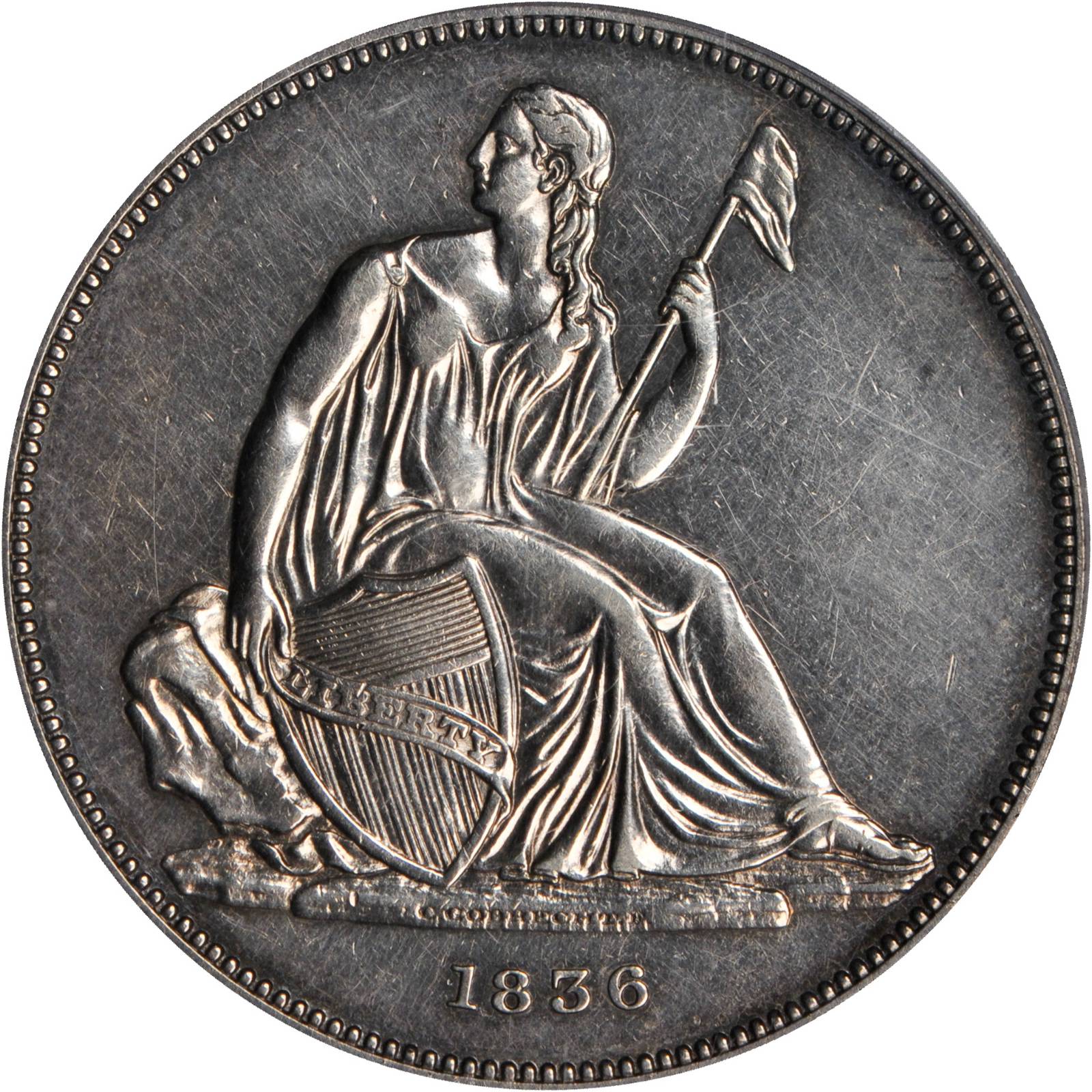
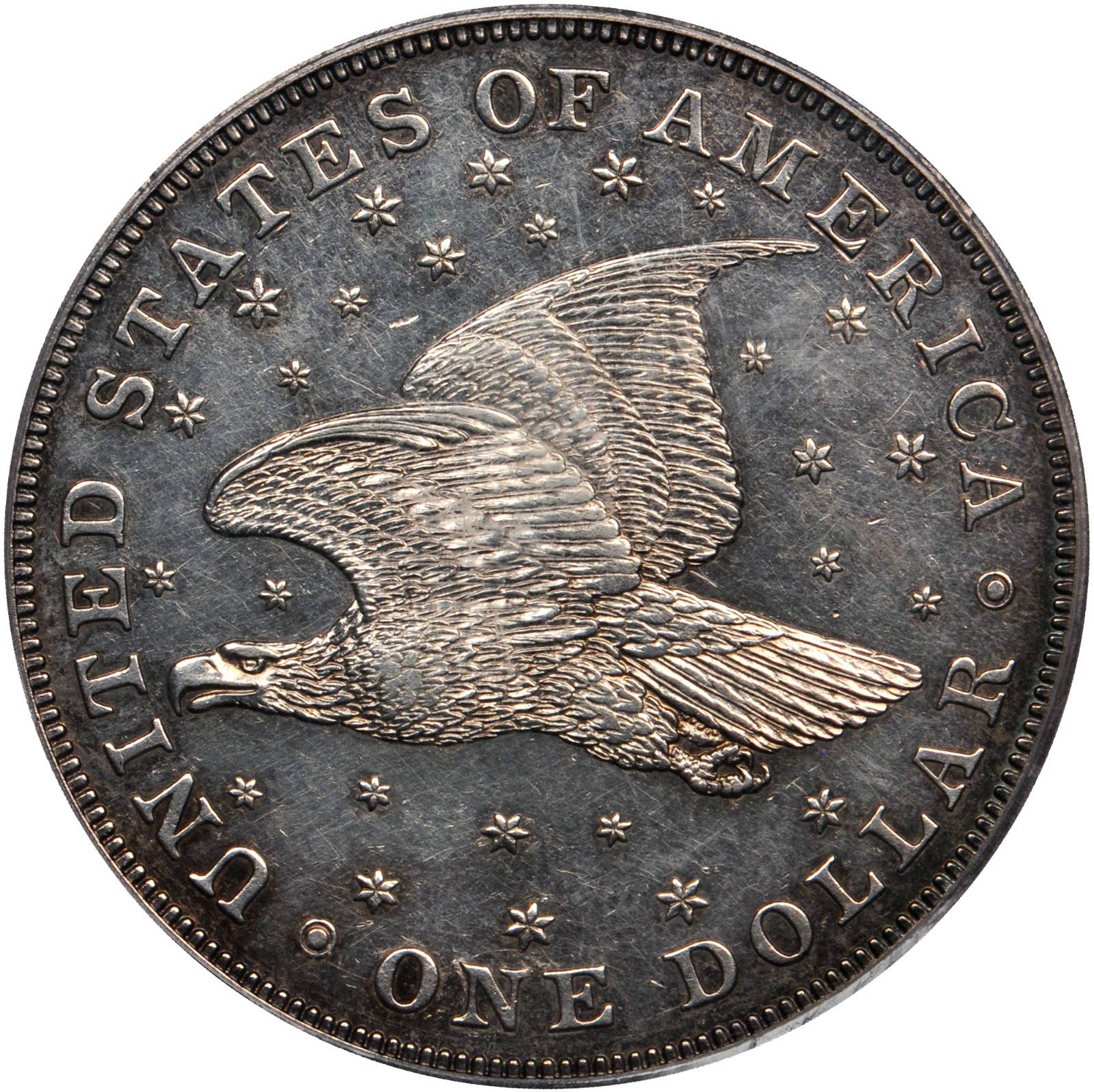
After a 33-year hiatus in silver dollar coinage, the Mint revived the denomination in 1836 with an entirely new design. Mint director Robert Patterson chose a Thomas Sully concept, and engraver Christian Gobrecht cut the dies — introducing the Seated Liberty obverse and a majestic flying eagle reverse (the latter later reused on the 1856 Flying Eagle cent). The Seated Liberty figure went on to appear on nearly every U.S. silver coin through 1891.
Key facts
- Designed by: Christian Gobrecht (concept by Thomas Sully)
- Issue dates: 1836–1839
- Composition: 89.24%–90% silver
- Diameter: ~38–40 mm
- Weight: ~26.9 grams
- Edge: Plain or reeded (varies by issue)
Gobrecht dollars were struck in small numbers — as patterns, presentation pieces, and limited circulating issues — and later restruck, so every variety is rare and highly prized. They are collected by major type, distinguished mainly by the placement of stars and the die alignment: the 1836 No Stars on Obverse / Stars on Reverse type and the 1838–1839 Stars on Obverse / No Stars on Reverse type. Authentication is essential, as restrikes and alignments matter greatly to value.
We actively buy Gobrecht dollars in every grade and variety. Send photos for a free, no-obligation offer and expert evaluation.